Teen Stagecraft Studio: Designing the World of Theatre (Ages 13-17)
Purpose
Students learn to think like theatrical designers by exploring how scenery, costumes, props, lighting, and sound work together to support storytelling. Through script analysis, visual research, concept development, and collaborative design thinking, students discover how every creative decision contributes to the world of a production.
Core Concepts
Script Analysis
Visual Storytelling
Design Thinking
Scenic Design
Costume Design
Properties
Lighting and Sound Concepts
Color and Mood
Collaboration
Creative Problem Solving
Design Presentation
Media and Materials
Students will use a variety of traditional and found materials to research, develop, and present theatrical design concepts.
Recommended Supplies
9" × 12" Mixed Media Sketchbook or Drawing Pad
Graphite Pencils (HB, 2B, and 4B Recommended)
Colored Pencils
Black Fine-Line Pen
Eraser
Ruler
Scissors
Glue Stick
Presentation Board (Approximately 20" × 30" Foam Board or Trifold Presentation Board for the Final Project)
Magazines, Printed Images, Fabric Swatches, Paint Chips, Wallpaper Samples, or Other Visual References for Mood Boards
Access to Digital Images for Research and Inspiration
A detailed supply list will be provided before the course begins.
Every theatrical production begins with an idea.
Stagecraft Studio serves as the foundation of theatrical design by introducing students to the creative process professionals use before construction ever begins. Students learn to analyze scripts, research historical and artistic influences, develop production concepts, and organize visual inspiration into cohesive design presentations.
Rather than focusing on drafting or model construction, students explore how scenery, costumes, props, lighting, and sound work together to communicate the story. Through mood boards, concept boards, color palettes, visual research, and collaborative discussion, students learn to think like designers while developing the creative and communication skills needed for future specialized design studios.
The Creative Mind Stagecraft Method
Students approach every design challenge through four creative habits.
Observe: What does the script reveal about the world, the characters, and the story?
Imagine: Explore creative possibilities through research, brainstorming, and visual inspiration.
Design: Organize ideas into concept boards, color palettes, research, and visual presentations that communicate a unified artistic vision.
Support: Develop design choices that strengthen the story while collaborating with directors, actors, and fellow designers.
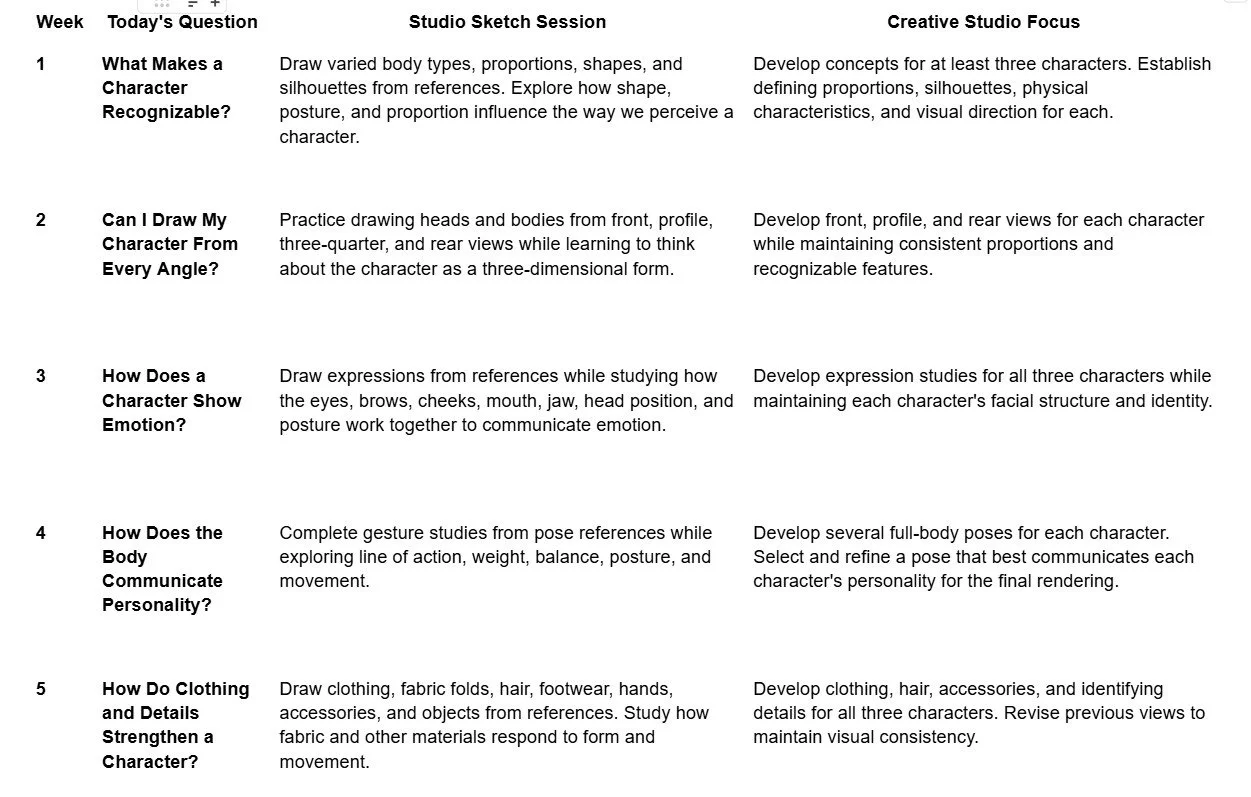
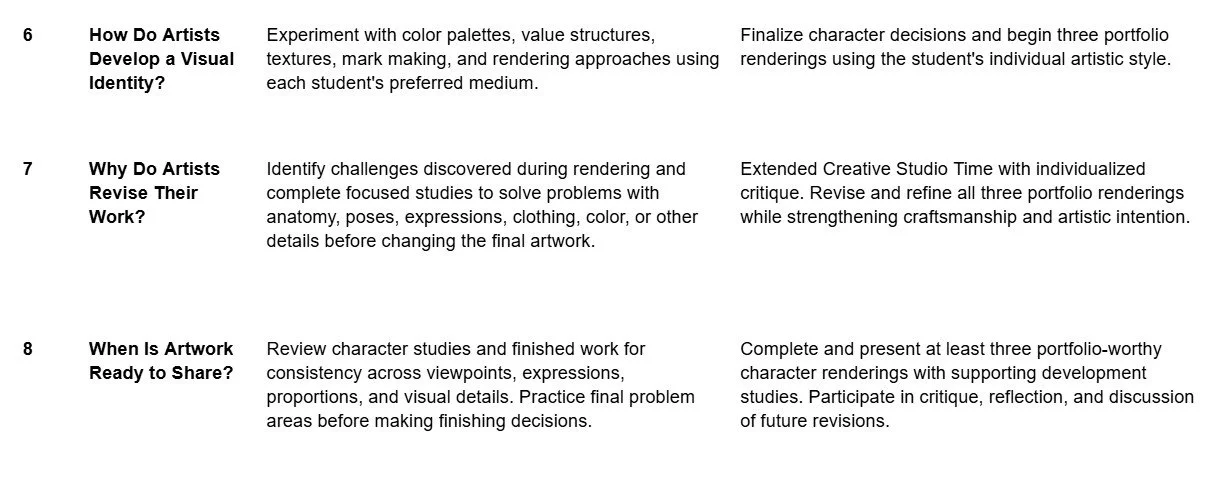
Eight-Week Journey
Portfolio Outcome
By the end of Character Illustration Studio, students will have developed at least three original characters.
Character development will include:
Front, Profile, and Rear Views
Facial Expression Studies
Gesture and Pose Studies
Clothing and Detail Development
Reference Studies
Drafts and Revisions
Three or More Polished Character Renderings
Development studies are not expected to have the same level of finish as the final renderings. They document the observation, experimentation, problem-solving, and revision that lead to stronger finished artwork.
Recommended For
Teens with previous drawing or painting experience who enjoy character creation, illustration, storytelling, theatre design, animation, comics, or other forms of visual storytelling and want to strengthen the artistic skills behind their character work.
Students should have a basic understanding of drawing, proportion, value, and their preferred artistic medium. Completion of Foundations of Art and Color Theory is recommended but not required. Students with equivalent experience may enter through instructor placement.
Where This Studio Can Lead
Character Illustration Studio strengthens observational drawing, visual storytelling, character development, and independent artistic decision-making while helping students begin developing work appropriate for an art portfolio.
Students may continue their creative journey through:
Costume Design Studio
Stories Through Illustration
Portfolio Development
Advanced Drawing Studios
Private Mentorship
Students may also return to Character Illustration Studio to develop new characters, explore different visual styles, or expand an existing body of character work.