Character Illustration Studio
Developing Characters Through Drawing
Adult Creative Studio
Purpose
Students develop the skills needed to create believable, expressive, and visually consistent characters through observation, reference drawing, artistic exploration, and revision. Through Studio Sketch Sessions, Creative Studio Time, and individualized critique, students learn to develop characters from multiple viewpoints while strengthening their understanding of proportion, expression, gesture, clothing, and visual storytelling.
The course culminates in the development of at least three original characters and three polished, portfolio-worthy character renderings.
Core Concepts
Character Development
Observational Drawing
Drawing From References
Shape and Silhouette
Proportion and Form
Multiple Character Views
Facial Structure and Expression
Gesture and Movement
Clothing and Fabric
Hair and Accessories
Color and Value
Visual Consistency
Artistic Style
Drafting and Revision
Portfolio Development
Media
Character Illustration Studio focuses on artistic concepts rather than a required medium. Students may work in the traditional medium that best supports their individual style and artistic goals.
Media may include:
Graphite
Colored Pencil
Charcoal
Soft Pastel
Alcohol Marker
Watercolor
Ink
Mixed Media
Students will also use a sketchbook for Studio Sketch Sessions, observational studies, character development, and revisions.
A detailed recommended supply list will be provided before the course begins. Artists who already have preferred materials are encouraged to use them.
A memorable character is more than a single successful drawing.
Character Illustration Studio challenges artists to develop characters that remain believable and recognizable from different viewpoints, expressions, and poses. Students learn to move beyond drawing solely from imagination by using real-world references to understand anatomy, facial structure, gesture, clothing, hair, objects, and movement.
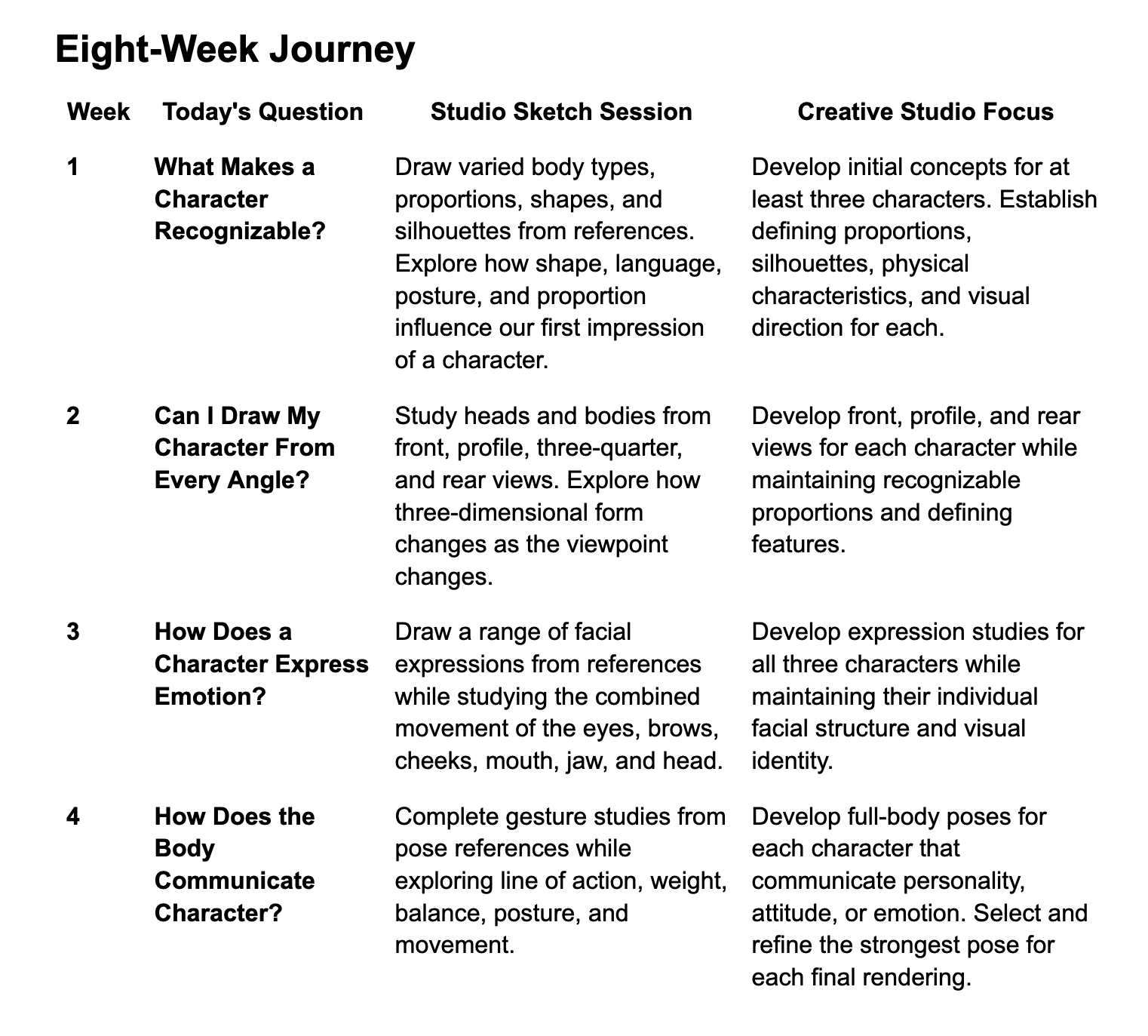
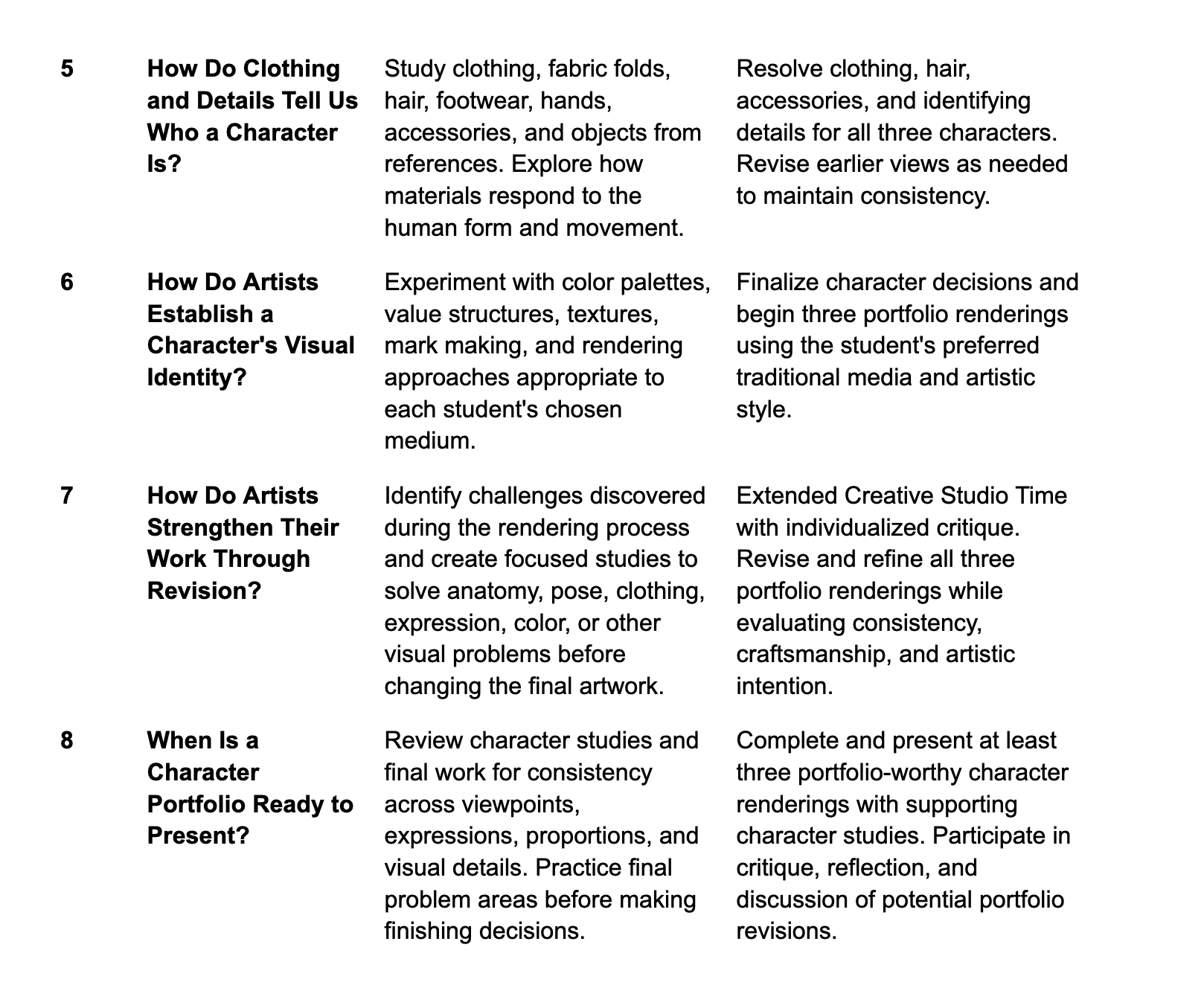
Each class includes a Studio Sketch Session where students strengthen specific drawing skills, work from references, experiment with ideas, and solve visual problems before applying those discoveries to their character development. During extended Creative Studio Time, students work independently while receiving individualized instruction, critique, and support.
Throughout the eight weeks, students develop at least three original characters simultaneously. Each character is explored through multiple views, expressions, gesture, clothing, and visual details before progressing into a polished final rendering. Developing the characters together allows students to apply new skills and discoveries across all three rather than completing one character before learning the next skill.
Students are expected to sketch, evaluate, revise, and refine throughout the course. The first drawing is not treated as the final solution. Feedback and revision are essential parts of the artistic process and help students develop the skills needed to evaluate and strengthen their own work.
The course concludes with at least three portfolio-worthy character renderings supported by character studies that demonstrate the artistic process behind the finished work.
The Creative Mind Character Illustration Method
Observe: Study people, expressions, poses, clothing, objects, and other real-world references to understand what you are drawing before interpreting it.
Explore: Use Studio Sketch Sessions to investigate shape, proportion, expression, gesture, movement, and visual possibilities without the pressure of creating finished artwork.
Develop: Build each character through multiple viewpoints, expressions, poses, clothing, and identifying visual characteristics.
Create: Apply the student's preferred medium and individual artistic style to create polished character renderings.
Refine: Receive individualized critique, revisit references, revise artistic choices, and strengthen the work through thoughtful refinement.
Portfolio Outcome
By the end of Character Illustration Studio, students will have developed at least three original characters.
Character development will include:
Front, Profile, and Rear Views
Facial Expression Studies
Gesture and Pose Studies
Clothing and Detail Development
Reference Studies
Drafts and Revisions
Three or More Polished Character Renderings
Development studies are not expected to have the same level of finish as the final renderings. They document the observation, experimentation, problem-solving, and revision that lead to finished artwork.
Recommended For
Adults with previous drawing or painting experience who want to strengthen their character illustration skills, develop original characters, or create portfolio-quality artwork.
Students should have a basic understanding of drawing, proportion, value, and their preferred artistic medium. Completion of a Creative Mind foundations course is recommended but not required. Artists with equivalent experience are welcome.
Where This Studio Can Lead
Character Illustration Studio strengthens observational drawing, visual storytelling, character development, and independent artistic decision-making. Students may continue developing their skills through Creative Studios such as:
Costume Design Studio
Stories Through Illustration
Portfolio Development
Advanced Drawing Studios
Private Mentorship
Artists may also return to Character Illustration Studio to develop new characters, explore different visual styles, or expand an existing body of character work.